Vegan Scones (and your guests won’t even notice!)

img_8915How good are scones?! Afternoon tea with jam and clotted cream. Last minute Saturday breakfast, warm with butter. Stale the next day, perked up in the toaster for an afternoon pick-me-up. Yep scones are amazing.

I’m not sure I know anyone who doesn’t like them,  so why should those who can’t/don’t eat dairy and eggs miss out?

Here’s my recipe for honestly delicious dairy and egg free scones, your afternoon tea guests won’t believe they’re vegan!

Fair warning: scones don’t keep well usually but these butter-free vegan scones really don’t keep at all, so don’t hold back! (a 10 second zap in the microwave will do something towards making your dry-next-day scones enjoyable)

Makes 12 scones

800g/28oz self-raising flour (800g all purpose flour + 10 tsp baking powder)
Pinch of salt
1/2 tsp Baking powder
170g/5oz chilled dairy-free baking block (I use Trex)
150g/5oz caster (superfine) sugar
300ml/10 fl oz milk alternative (I like oat milk)
1 tbsp vanilla essence
70g/2.5oz raisins/sultanas

Pre-heat the oven to 180 c (350 f)

Step 1 – mix the flour, salt and baking powder together in a large bowl with a whisk
Step 2 – add the baking block, it is much softer than butter – use a spoon.
Step 3 – use a knife to mix the dry ingredients with the baking block until it’s well coated, then get your hands in a rub together like regular scones
Step 4 – add the sugar and rub until the mixture looks like breadcrumbs
Step 5 – make a well and add the milk, stir with your knife until the mixture clumps
Step 6 – add the dried fruit
Step 7 – tip the mixture onto a clean surface and knead together, if it’s sticky add a little flour
Step 8 – flatten with your hands to around 5 cm (2in) making sure it is totally level (no sloping edges) but BE GENTLE!
Step 9 – use a circle cutter to cut out your scones, don’t twist the cutter. Ball and flatten until all the dough is cut.
Step 10 – brush with milk alternative and bake for 17-19 minutes.

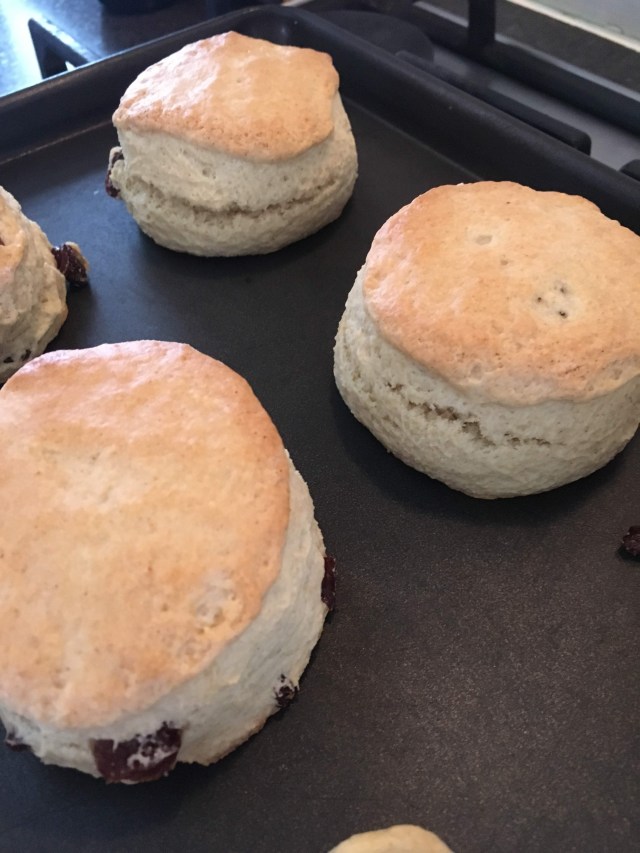
They should be honey coloured on top, well risen and pale on the sides. Cool for at least 10 minutes on tray or rack.
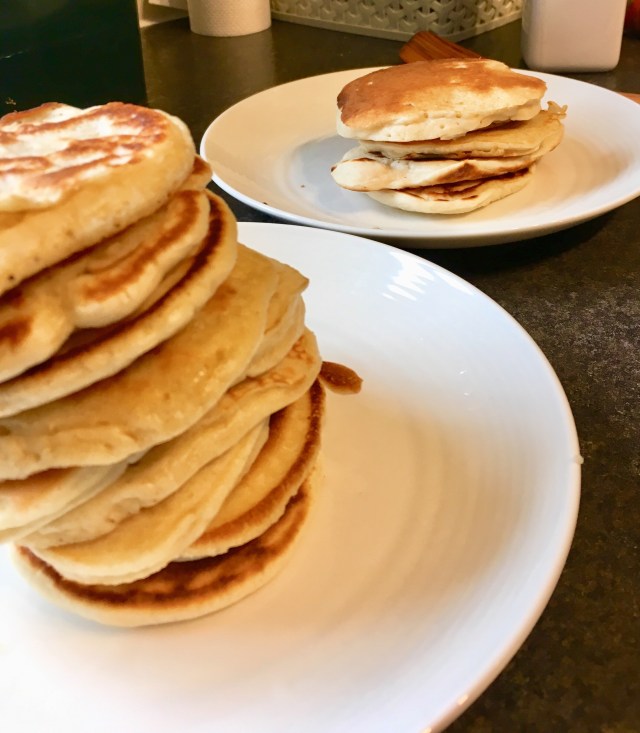


Egg Replacer Pancakes

My eldest daughter loves pancakes, the fluffy American style ones in particular and will eat them hot for breakfast or cold straight out of the fridge any time of day! (She loves them with “sywup” 😍)

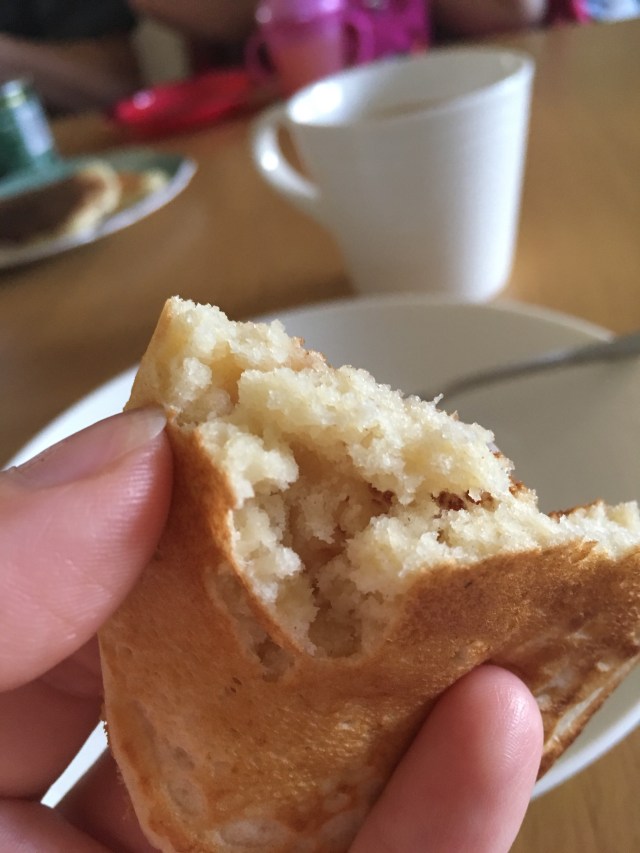
On her birthday I made a regular batch and a second batch which I substituted egg replacer for eggs and honestly, they were gross! A good splash of milk to the mixture made them palatable but the yield was still significantly less than the regular ones as they were so stodgy.

So I decided to create a recipe specifically for egg replacer, after some (extensive) experimenting, here it is!

225g plain flour

3 tsp baking powder

2 tsp egg replacer powder

Pinch salt

1 tsp syrup

35g flavourless oil (like sunflower)

3 tbsp water

300 ml milk

And the magic ingredient:

Half a very soft mashed pear (no skin or core)

Method:

Add the milk, oil and water to a jug.

Whisk together all the remaining ingredients in a large bowl.

Slowly pour in the wet ingredients whisking as you go, don’t worry if it starts off lumpy.

Pour into circles in a frying pan over medium heat, flipping when the bubbles on top start to burst and leave holes.

They might seem stodgy right out of the pan but will be fluffy by the time you get them to the table.

Tip- they will brown quickly so watch them carefully and adjust heat accordingly.

Tip 2- if your pear is too hard, halve it and put in in a bowl with a splash of water in the microwave for 30 second bursts.

Adventures in Egg Replacer

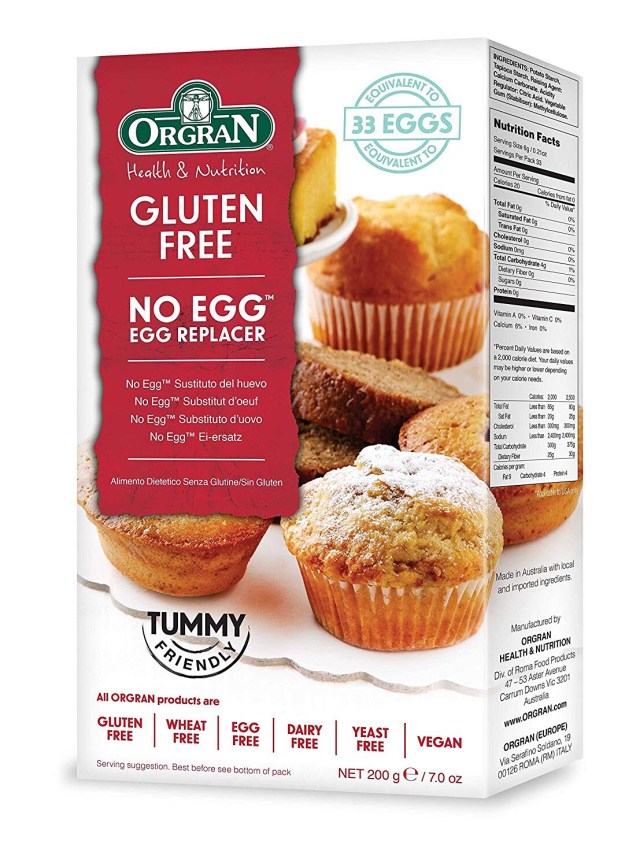
Yesterday I tried out my new box of egg replacer. I’m using OrgraN No Egg, widely available in the UK inexpensively, you can also get it in Australia and the US.

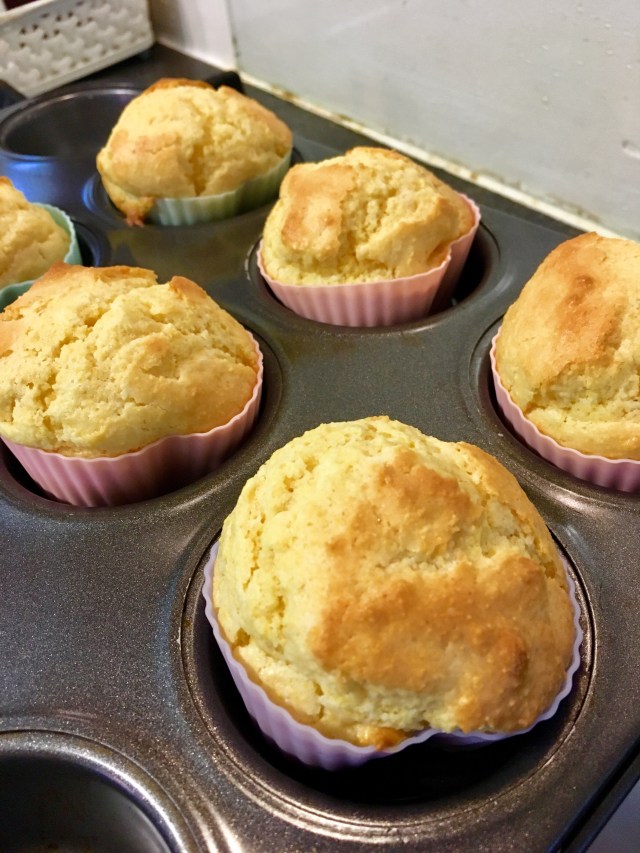
My first experiment was replacing one egg in a box of corn muffin mix (Jiffy). Mixing the ‘egg’ was a bit confusing, the instructions just tell you the powder to water ratio not how to mix or if it should be a certain temperature or left any amount of time. I put the two together and stirred with a spoon, I think I left quite a lot of powder at the bottom of the cup, and used immediately.

My corn muffins rose well but didn’t hold together at all and the taste was slightly off. All in all, not a success!

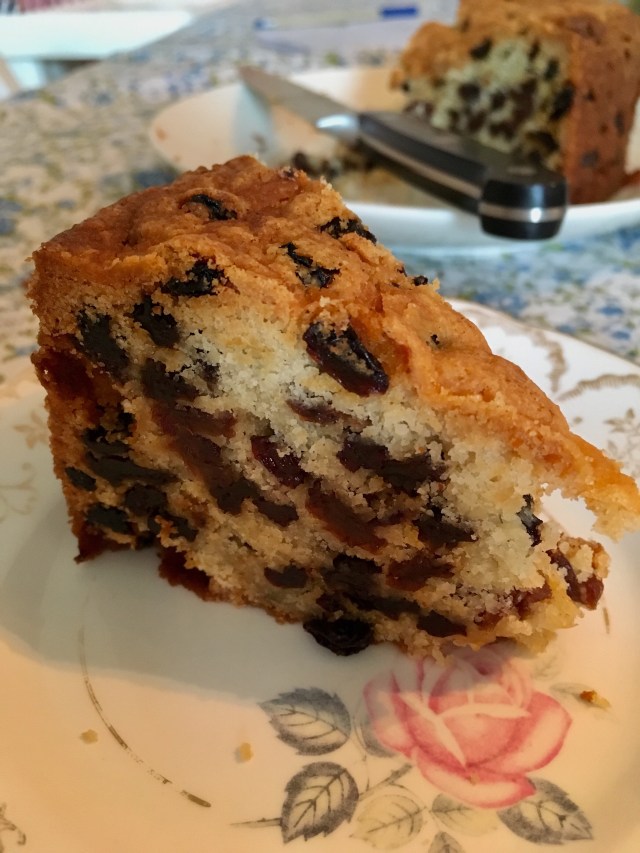
Later in the day I made a fruitcake. Matt has requested one for his birthday and it needs to be egg free, I thought I should probably practice!

I’ve used a Mary Berry recipe for an easy light fruit cake, copied below, which required 4 eggs. This time I mixed with a whisk until it was a bit foamy, I also put a spoon of batter back into the cup to help scoop out all the dregs. The cake sank a little in the middle when it cooled but I have to confess I was rushing a little and pulled it out of the oven a tiny bit early which probably didn’t help!

The taste was good, it was slightly dense but there was almond meal in the mixture so this felt natural and it was lovely and moist. Matt was happy with it so I’ll be making it again next week for the big day and will be a bit more patient!

Overall, I’m happy with the egg replacer. It’s not quite the same as eggs, or at least I haven’t figured it out yet, but it is a good alternative.

Mary Berry’s Easy Light Fruit Cake

Serves 12

Ingredients

* 225g butter (room temperature) or vegetable spread (at least 70% fat), plus extra for greasing

* 225g caster sugar

* 4 large eggs/equivalent egg replacer

* 225g self-raising flour

* 100g ground almonds

* 1⁄2 tsp almond extract

* 450g mixed dried fruit

* 25g flaked almonds (optional)

Method

1. Preheat the oven to 160°C (fan 140°C/325°F/Gas 3). Grease a 20cm (8in) springform or deep, loose-bottomed round cake tin. Line the base and sides of the tin with baking parchment.

2. In a large bowl, cream the butter or vegetable spread and sugar with an electric mixer or wooden spoon until fluffy, then add the EGG REPLACER a little at a time, beating well between each addition to prevent curdling.

3. Fold in the flour, ground almonds, and almond extract and beat until all the ingredients are thoroughly mixed. Gently fold the dried fruit into the mixture, stirring with a wooden spoon until well combined.

4. Spoon the mixture into the tin and level the top. If you like, sprinkle the surface with the flaked almonds.

5. Put the tin into the oven and bake for one and a half to two hours. Test the cake for doneness with a skewer. If the skewer comes out wet and sticky, return the cake to the oven to cook further. When the cake is done, remove from the oven and leave to cool in the tin.